
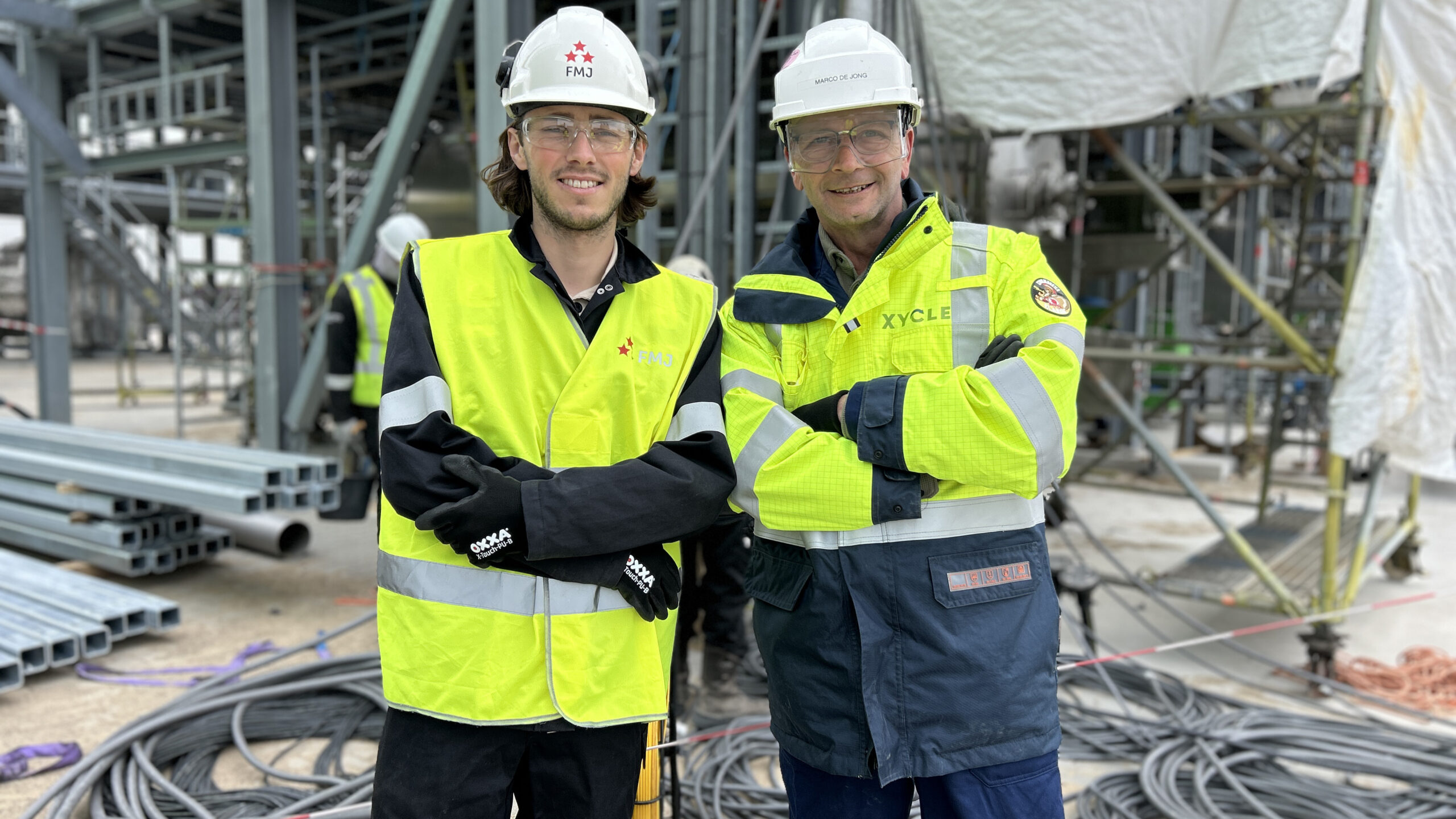
FMJ plays a key role in the construction of Xycle’s recycling plant
Anyone walking around Xycle’s construction site in the Port of Rotterdam can see the plant taking shape step by step. Behind the scenes, dozens of specialists are working together every day on the installations that will transform hard-to-recycle plastic waste into a valuable feedstock for new plastics. One of the companies making a significant contribution is FMJ Group, which is responsible for a large part of the site’s electrical installations. We spoke with Marlon Reedijk, Project Manager at FMJ, and Marco de Jong, Area Manager E&I at Xycle, about the technology, the collaboration and the journey towards producing the first drop of pyrolysis oil.
Connecting every system
FMJ has been involved in the project since the tender phase in 2023. At the end of 2024, the team started the detailed engineering work. Today, around fifteen specialists are working on site, installing cable trays, pulling cables, connecting equipment and preparing for the commissioning phase.
“Virtually everything that needs to be electrically connected on site goes through our team,” says Marlon Reedijk. “From the cable infrastructure to system testing and supporting the commissioning activities.”
For Marco de Jong, the project is all about integrating the electrical, instrumentation and automation systems into one fully functioning installation. From Xycle’s side, he oversees the collaboration between suppliers, contractors and the project team to ensure the plant can ultimately be handed over safely and reliably to the Operations team. “If a single wire doesn’t end up on the correct terminal, the installation simply won’t work. It’s that interaction between hardware, instrumentation and control systems that makes this field so interesting.”
A complex puzzle
A project of this scale involves many suppliers, each delivering their own equipment and systems. In the end, everything has to communicate seamlessly. “The biggest challenge was managing all the data, interfaces and coordination throughout the engineering phase,” Marlon explains. “Not every party was involved from the very beginning, so many parts of the project had to be developed in parallel.”
Marco agrees that this has been one of the project’s biggest challenges. “Normally, you complete a large part of the engineering before construction begins. Here, engineering, procurement and construction largely progressed simultaneously. That requires a great deal of coordination and flexibility from everyone involved.”
Specialist expertise
According to Marlon, the level of expertise required for industrial projects like this is often underestimated. “We operate in an environment where safety, material selection and hazardous area requirements are critical. Choosing the right materials and understanding what is and isn’t permitted in an explosion-protected environment are second nature to us, but that knowledge is built on years of experience.” That expertise proves invaluable every day. Whenever technical challenges arise, the team continuously looks for practical solutions to keep the project moving forward.
Building a circular future
Beyond the technical challenge, both men are motivated by the broader impact of the project. “Personally, I’m proud to contribute to a project focused on recycling and circularity,” says Marlon. “Without really thinking about it, we use enormous amounts of plastic every year. I hope our work contributes to Xycle’s success and helps drive further progress towards a circular economy.”
For Marco, that same aspect makes the project unique. “I spent many years working in the traditional oil and tank storage industry. Here, we’re still working with oil, but from a circular and sustainable perspective. That’s what makes this project different and especially rewarding.”
Preparing for commissioning
Over the coming months, the focus will increasingly shift towards commissioning: testing and bringing the various systems and installations into operation. During this phase, FMJ and Xycle will verify that instruments function correctly, signals reach the right destinations and equipment responds exactly as intended. “That’s the moment when you find out whether everything works together as it was designed to,” says Marlon. “But it’s also a phase where safety becomes even more critical. The systems are energised and equipment starts moving for the first time. That requires everyone to remain highly alert.”
Proud of what has been achieved
Although there is still plenty of work ahead, both men are proud of what has already been accomplished. Marlon is particularly proud of the flexibility shown by the FMJ team throughout the engineering and construction phases.
“Not all the project data was final from the outset, but together we ensured that work could continue without jeopardising the overall schedule.” In the coming months, many more kilometres of cables will be installed, connected and tested. One of the next major milestones will be energising the electrical cabinets serving the pyrolysis units.
And when will the project be considered a success?
Marco doesn’t hesitate.”If we deliver the project safely, on schedule and within budget, and we produce the first drop of pyrolysis oil by the end of the year, then I’ll consider it a success.” Marlon couldn’t agree more.