
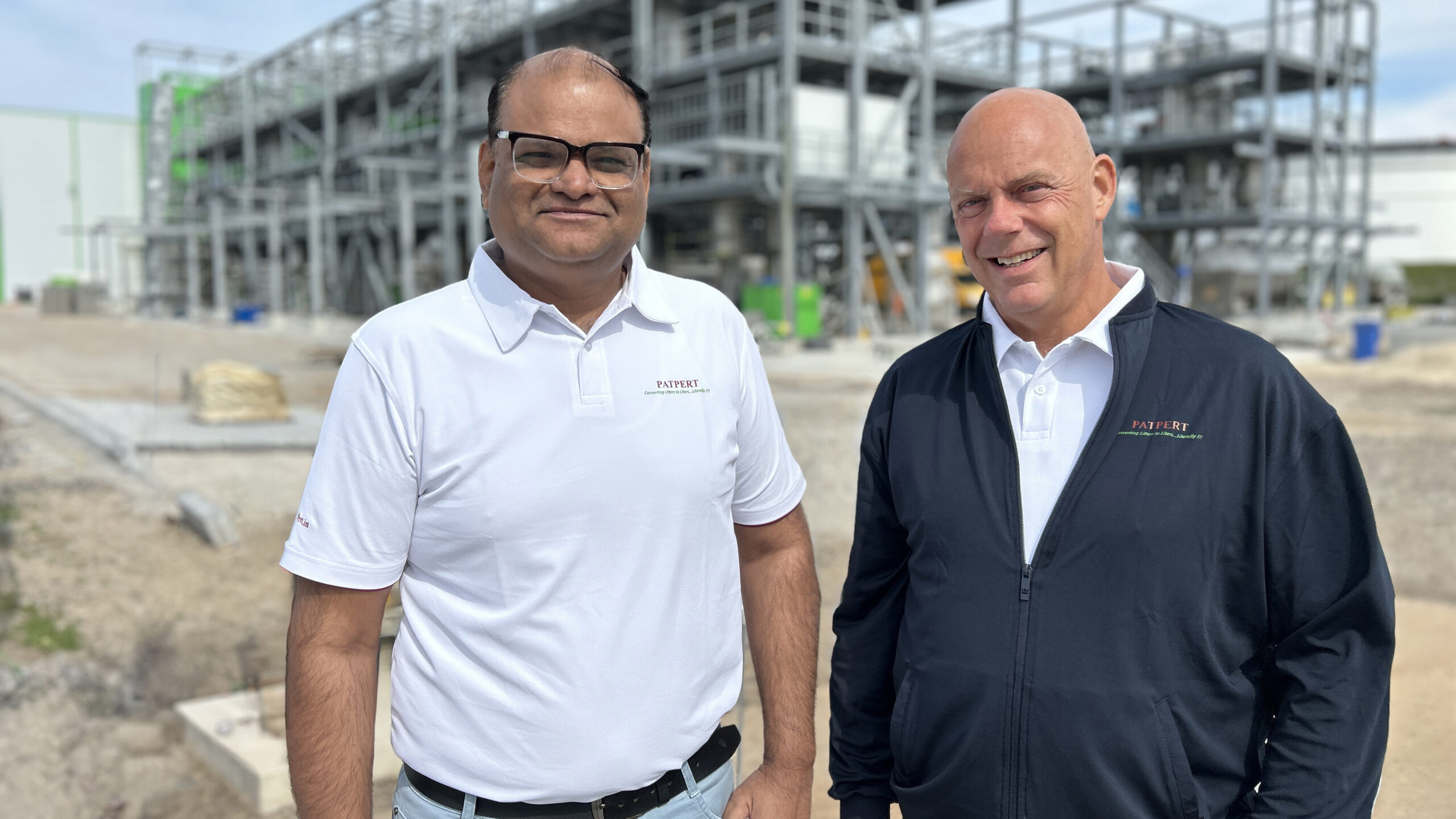
From India to Rotterdam: The People Behind Xycle’s Technology
The construction of Xycle’s first commercial-scale chemical recycling plant in the Port of Rotterdam marks an important milestone. Behind this project, however, lies a much longer story—one of nearly two decades of collaboration, technological development, and entrepreneurship. We spoke with Nilesh Inamdar and Laurens Trebes of Patpert Teknow Systems, the technology partner behind Xycle’s pyrolysis reactors.
The foundations of the project were laid back in 2008, when Nilesh and Laurens first met. “Laurens knew the plastics industry well and immediately saw the potential of the technology we had developed in India,” says Nilesh. “We quickly realised that we could build something together.” To explore opportunities for the European market, several Dutch parties, including NoWit, visited Patpert Teknow Systems’ facility in India. “We saw a fully operational plant with our own eyes. That made a strong impression,” says Laurens. “It wasn’t just a concept on paper. The technology was already proven in practice.”
Pilot facility in Moerdijk
The first step in the Netherlands was the development of a pilot facility in Moerdijk. As the project progressed, more parties became involved. Through Arjen and Chris from NoWit, Vopak also joined as an investor. Plans for a commercial-scale plant started to take shape, and financing appeared to be within reach. Then the COVID-19 pandemic hit. “Everything came to a standstill,” recalls Nilesh. “Steel prices rose sharply, investors became more cautious, and economic conditions changed dramatically. We realised that the capital we had raised up to that point would no longer be sufficient to bring the project to life.”
A major breakthrough
Rather than giving up, the team decided to think bigger. “We revised the plans and started looking for new partners. A major breakthrough came when Dow joined the project,” says Laurens. “Dow not only provided confidence by committing to purchase a significant share of the output, but also helped attract additional investors. That proved to be a crucial turning point.” According to Nilesh, the progress being made today is the result of years of perseverance. “It has taken a great deal of time, energy, and investment. But throughout the journey, we never stopped believing in the potential of this technology.”
Proven technology
Confidence in the Rotterdam plant is built on many years of operational experience. Patpert Teknow Systems has supplied dozens of successfully operating reactors across India, processing a wide range of plastic waste streams, including complex and challenging feedstocks. “We have demonstrated that the technology works,” says Nilesh. “Not every waste stream produces the same oil quality, but we understand how to manage those variations. We know how to process the material and convert it into valuable pyrolysis oil. That gives us confidence as we move towards operations in Rotterdam.”
At its Rotterdam facility, Xycle will initially process, among other materials, post-consumer plastic films that are often incinerated or sent to landfill today. The pre-treatment facility has been specifically designed to handle these difficult-to-recycle waste streams. “In Europe, this type of plastic often has a negative value. Companies actually have to pay to dispose of it. That is precisely where an important opportunity exists to increase circularity.”
Collaboration as the key to success
According to Laurens and Nilesh, building a successful recycling value chain requires more than technology alone. “Collaboration is essential,” says Nilesh. “From waste sorting companies and off-takers to plant operators and technology partners. Everyone is working towards the same goal: building a successful plant that contributes to a circular economy.” In their view, this collaboration provides the foundation for the next step. Laurens and Nilesh hope the plant will demonstrate how chemical recycling can contribute to a circular plastics value chain and help preserve valuable raw materials for future use.
“Mechanical and chemical recycling both have an important role to play,” says Laurens. “It’s not about choosing one over the other. It’s about finding the right balance and ensuring that as much plastic as possible remains in the value chain.” According to them, what sets Xycle apart is the combination of proven technology and an experienced team. “Many companies that are currently facing challenges are deploying new technologies for the first time. At Xycle, proven technology is combined with a highly experienced team whose members have built their careers at companies such as Dow and Vopak. That combination gives us confidence in the future.”